
Key highlights: A tankless water heater gives you continuous hot water and cuts standby energy loss, and the U.S. Department of Energy estimates gas and electric tankless units can be 24% to 34% more efficient than tanks in homes that use 41 gallons of hot water a day or less. The install costs more than a tank swap, mostly because of gas, venting, and condensate work. Energy Trust of Oregon currently offers a $400 incentive for qualifying gas tankless units that replace a gas tank. Portland-area city water is soft, so scale builds slowly, but yearly service still matters, especially on wells.
Introduction
If you own a home in the Portland metro, you have probably heard someone rave about their tankless water heater, and someone else complain about what it cost. Both can be right. This guide covers what a tankless install actually involves, what you can expect to save, which incentives are available now, and when a tank is still the better choice.
Quick Answer for Busy Portland Homeowners
For many Portland-area households, a tankless water heater is worth it if you plan to stay in the home for years, use a fair amount of hot water, and your home can supply the gas and venting the unit needs. It is less likely to pay off in a small household with low hot water use, or if you plan to move soon.
The Main Takeaways on Tankless Water Heaters
A tankless unit heats water only when a tap opens, so it does not spend energy keeping a full tank hot all day. That is where the savings come from.
- Continuous hot water: No tank to run out, as long as the unit is sized for your peak demand.
- Lower standby losses: No stored water cooling off between uses.
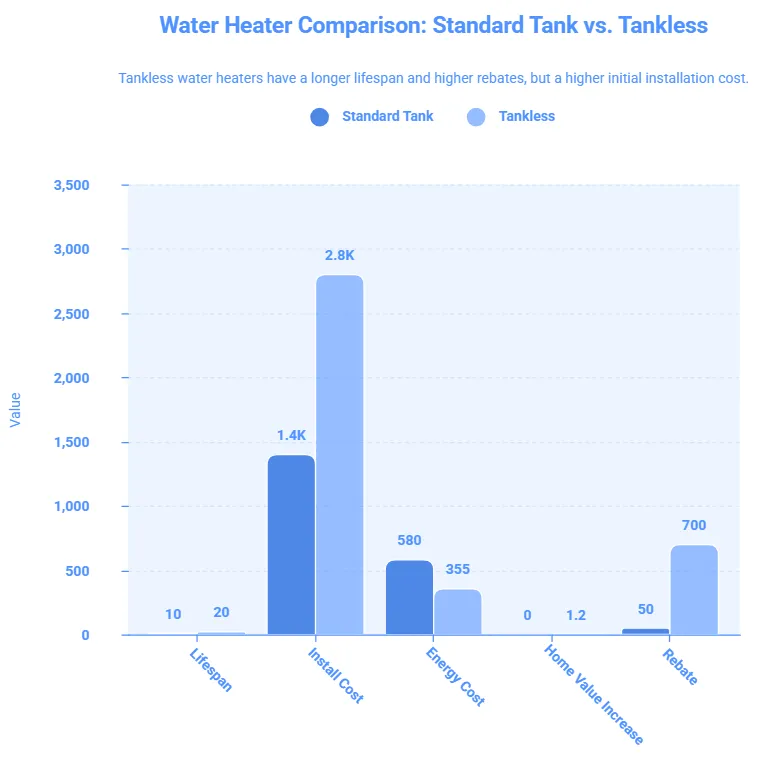
- Long service life: The Department of Energy notes most tankless units last more than 20 years, compared with 10 to 15 years for a storage tank.
- Space: The unit mounts on a wall and frees up floor space.
Upfront Cost vs Long-Term Value in Clackamas and Multnomah Counties
A tankless install costs more upfront than replacing a tank with another tank. The difference comes less from the unit and more from the work around it: gas supply, venting, condensate drainage, mounting, and permits. In older homes around Clackamas and Multnomah counties, that supporting work is often the bigger share of the bill.
Value builds over time through lower energy use and a longer service life. If you expect to replace a tank once or twice over the life of one tankless unit, the long-term math looks better than the upfront quote suggests.
The Real Cost of a Tankless Install in the Portland Metro
National cost guides often quote a simple unit swap. Real installs in the Portland area usually include more. Here is what we typically see on the work orders for a tankless water heater installation in Oregon City and nearby cities.
Average Installation Prices in Portland, Milwaukie, and Oregon City
Rather than a single number, it helps to know what moves the price. These are the line items that make one install cost more than another:
| Cost factor | Why it matters |
|---|---|
| The unit | Gas, propane, and electric models differ, and larger units cost more. |
| Gas supply | Tankless heaters need a large burst of gas. Some homes need new or rerouted gas piping. |
| Venting | Most gas tankless units vent through PVC or stainless pipe to the outside, often through a new wall or roof penetration. |
| Condensate | High-efficiency units produce acidic condensate that needs a drain or a condensate pump. |
| Mounting | The wall may need new blocking to carry the unit. |
| Electrical | Gas units need an outlet. Electric units can require a panel upgrade. |
| Permits | A permit and inspection are required. |
| Add-ons | Scale protection filters, isolation valve kits, and recirculation. |
The only reliable number for your home comes from an on-site look at your gas, venting route, and electrical.
Permit Fees, Gas Line Upgrades, and Local Code Requirements
Replacing or installing a water heater requires a permit in Oregon. Permit fees vary by jurisdiction, so your plumber should include them in the quote.
Two recent installs show how much the supporting work can vary. In Oregon City, our crew replaced a basement power-vent tank with a natural gas tankless unit. That job needed new 2×6 blocking to carry the mounting bracket, reworked black iron gas piping, a scale prevention filter, an isolation valve kit, and a condensate pump with the discharge routed outside through the old vent opening. A licensed electrician added a new outlet for the heater and pump.
On a rural property in Beavercreek, the homeowner moved from a 50-gallon electric tank to a propane tankless unit. That install needed a new propane line run from the attic to the garage, new PVC intake and exhaust venting with roof flashing, a condensate drain, and a whole-home filtration system on the incoming water. The unit’s built-in recirculation pump also replaced an older stand-alone pump on the home’s recirculation loop.
Code requirements we check on every job include:
- Venting routed and terminated to the manufacturer’s specifications.
- Gas piping sized for the unit’s full input.
- A drip leg and proper gas connector at the appliance.
- An approved discharge for the temperature and pressure relief valve.
- A proper drain for condensate.
Energy Savings: What Oregon City Homes Actually Save
Savings depend on how much hot water your household uses, the efficiency of the old heater, and your gas or electric rates.
Typical Monthly Bill Changes for Portland-Area Homeowners
The Department of Energy estimates that for homes using 41 gallons or less of hot water daily, demand water heaters can be 24% to 34% more energy efficient than conventional storage tanks. For homes that use a lot of hot water, around 86 gallons per day, the gain drops to 8% to 14%.
Your bill change depends on how much of your energy use goes to water heating. A household with heavy hot water use will see a larger dollar savings than a single person in a small home.
Comparing Tankless and Traditional Water Heater Efficiency in West Linn
Water heater efficiency is rated by Uniform Energy Factor, or UEF. Condensing gas tankless units typically carry much higher UEF ratings than standard atmospheric gas tanks, because they capture heat that a tank sends up the flue and they avoid standby losses. When you compare quotes, compare the UEF on each unit’s label.
Energy Trust of Oregon Rebates and How to Claim Them
Energy Trust of Oregon offers cash incentives for qualifying efficient water heaters for customers of participating utilities.
Navigating the Energy Trust Rebate for New Installs
As of this update, Energy Trust’s water heater incentive page lists a $400 incentive for gas tankless water heaters in Oregon. Its conditions include:
- The unit must be ENERGY STAR certified at the time of purchase.
- It must replace an existing gas storage tank water heater.
- It must appear on Energy Trust’s qualified products list.
- A contractor must install it.
Incentive amounts and rules change, so confirm the current offer before you buy.
Additional Incentives for Clackamas and Washington County Residents
The federal Energy Efficient Home Improvement Credit (section 25C) no longer applies to new installs. According to the IRS, the credit is not allowed for property placed in service after December 31, 2025. Check with your gas utility for any current offers, and talk to a tax professional about your own situation.
When Tankless Is NOT Worth It: Honest Edge Cases for Portland
A tankless heater is not the right answer for every home.
Older Housing Stock Considerations in Sellwood and Gladstone
Older homes in neighborhoods like Sellwood and Gladstone were not built with tankless heaters in mind. Common challenges include:
- Gas piping that may need to be rerouted or resized for the unit’s full input.
- A vent route that has to pass through finished walls or the roof.
- Limited wall space for mounting and service clearance.
- No convenient drain for condensate.
None of these rule out a tankless unit, but each adds cost.
Situations Where Conventional Heaters Make More Sense
A high-efficiency tank may be the better value if:
- You live alone or use little hot water, so savings would be small.
- You plan to move within a couple of years.
- Your home would need extensive gas or venting work.
- Your budget points to the lower upfront cost of a tank.
Schedule Your Service With a Local Expert
Need a plumber? We’ll show up fast, fix it right, and leave your space clean. Book your service today.
Water Quality in the Portland Area: Impacts on Tankless Heaters
Scale is the main long-term threat to a tankless heater. When hard water is heated, calcium and magnesium can deposit inside the heat exchanger. The good news is that most city water in our area is soft.
The Portland Water Bureau reports in its 2025 drinking water quality report that Bull Run water is soft, with a typical total hardness of 7 to 11 parts per million. Its groundwater supply is moderately hard at about 80 ppm. In Oregon City and West Linn, the South Fork Water Board treats water from the lower Clackamas River and describes it as soft.
Addressing Mineral Buildup in Portland and Happy Valley
Soft water means scale builds slowly on city water, but it does not mean never. And homes on private wells, common in rural Clackamas County, can have much harder water or dissolved iron. A scale prevention filter on the cold inlet is a simple add-on that helps protect the heat exchanger, and we often include one.
Maintenance Needs for Long-Term Reliability
Regular service keeps a tankless unit running well:
- Descale the heat exchanger on the schedule your manufacturer and water supply call for.
- Clean the inlet water screen.
- Check the venting for blockage or damage.
- Inspect the gas connections and sediment trap.
- Watch for error codes on the display.
On a recent tankless service in Portland, the descaling solution circulated for the full 45 minutes the manufacturer calls for, followed by a rinse, a burner and flame sensor check, and a full hot water demand test. For flush timing based on your water source, see our guide on how often to flush a tankless water heater.
Lifespan: How Long Tankless Heaters Last vs. Tank Models
The Department of Energy notes that most tankless water heaters have a life expectancy of more than 20 years, while storage tanks typically last 10 to 15 years. Many tankless parts can also be replaced individually.
Durability in Oregon’s Wet Climate
Most tankless units here are installed indoors, in a garage, basement, or utility room, which protects them from weather. Where venting passes through the roof or wall, proper flashing and sealing keep rain out of the penetration.
Typical Repair and Replacement Cycles in Multnomah County
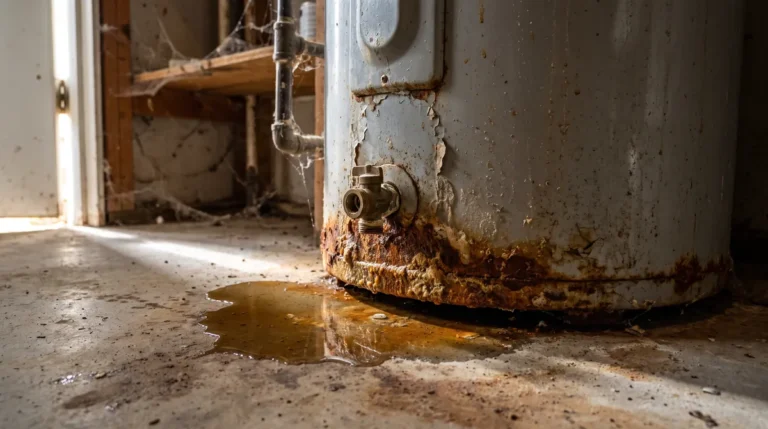
Tankless units do fail, and condensate is a common culprit. In Oregon City, we replaced a tankless heater that was showing an error code after condensate had saturated its combustion chamber and heat exchanger, leaving visible rust inside. The repair was not worth it at that point. We installed a new unit on new wall supports, added a drip leg on the gas line, and reconnected the existing venting and condensate drain. Proper condensate drainage and regular service are the best protection against that kind of failure.
When you compare manufacturers, look at the heat exchanger warranty. The Noritz units we install, for example, carry a 25-year limited warranty on the heat exchanger in a single-family home.
Call to Action: Get a Tankless Quote for Your Home
The right choice depends on your home’s gas supply, venting route, water source, and how your household uses hot water.
Who Qualifies for a Quote in Oregon City, Milwaukie, Happy Valley, and West Linn
We provide in-home quotes for homeowners across Oregon City, Milwaukie, Happy Valley, West Linn, and the wider Portland metro. We look at your current heater, gas piping, electrical, and venting options, then give you a written scope so you can compare a tankless unit with a new tank side by side.
Contact Principled Plumbing LLC (CCB #249603) Today: Phone (503) 919-7243
Principled Plumbing LLC is a family-owned, licensed plumbing company (CCB #249603) serving Clackamas, Multnomah, and Washington counties. Call (503) 919-7243 to schedule a visit.
Conclusion
A tankless water heater can be worth it in the Portland area when your household uses enough hot water, you plan to stay, and your home can supply the gas and venting it needs. Soft city water helps it last. Compare the full installed scope, not just the unit price, and confirm the current Energy Trust incentive before you buy.
Frequently Asked Questions
Are tankless water heaters worth it in Portland?
Often, yes, for households that use a fair amount of hot water and plan to stay in the home. The Department of Energy estimates 24% to 34% efficiency gains in homes using 41 gallons a day or less, and tankless units typically last longer than tanks. Small households and homes that need major gas or venting work may do better with a tank.
What factors affect the installation cost of a tankless water heater in Portland?
The unit itself, gas supply changes, venting, condensate drainage, wall mounting, electrical, and permits. In older homes, the gas and venting work often costs more than the unit.
Is there a federal tax credit for tankless water heaters in 2026?
The section 25C Energy Efficient Home Improvement Credit does not apply to property placed in service after December 31, 2025, according to the IRS. Energy Trust of Oregon currently lists a $400 incentive for qualifying gas tankless units that replace a gas tank.
Does Portland have hard water?
No. The Portland Water Bureau reports that Bull Run water is soft, at about 7 to 11 ppm. Its groundwater supply is moderately hard at about 80 ppm, and private wells vary widely.
Are there permit requirements for tankless water heater installation in Portland?
Yes. Water heater installs require a plumbing permit and inspection. The gas line must be sized for the unit, and venting must terminate outdoors to code and the manufacturer’s instructions.