
Key Highlights: No tape, sealant, epoxy or clamp is an approved repair for a leaking gas pipe. The failed pipe or fitting gets cut out and replaced, then the system is pressure tested. NW Natural owns the pipe up to your meter, and you own everything after it. If you smell gas, leave the house first, then call 911 and NW Natural at 800-882-3377 from outside.
The short answer: replace the leaking section
You cannot safely patch a leaking gas line. Tape, Flex Seal, epoxy putty and hose clamps might slow a leak for a day or two. None of them is an approved repair.
The national fuel gas code, NFPA 54, is blunt about it. Defects in gas pipe or fittings are never to be repaired by caulking, peening, clamps or cement. The bad pipe or fitting comes out, and new material goes in.
Oregon adds a paperwork step. The state Building Codes Division requires a mechanical permit for gas pipe work. That covers any pipe between the meter and an appliance, inside or out. So the fix is real work with an inspection at the end. A can of sealant cannot pass that inspection.
Why sealant cannot patch a leaking gas line
Gas inside your house line sits under steady pressure all day and all night. A coating smeared on the outside of a pipe has nothing to grab except rust and old paint. Gas keeps pushing from the inside, and it finds the edge of the patch.
Threaded joints are one of the most common leak points. The joint compound dries out over the decades, or a fitting gets bumped during a remodel. Putty over that joint hides the leak from a soap test while the joint keeps weeping underneath.
There is a second problem. A patched joint looks repaired to the next person who works on the house. Buyers and home inspectors trust what they see, and the leak stays hidden until someone smells it.
Where gas leaks show up in Oregon City homes
Oregon City has a wide mix of housing. The older blocks near the McLoughlin neighborhood date back more than a century, and many of those homes got gas piping decades after they were built. That piping often runs through crawlspaces and along exterior walls, where Willamette Valley rain keeps it damp for months.
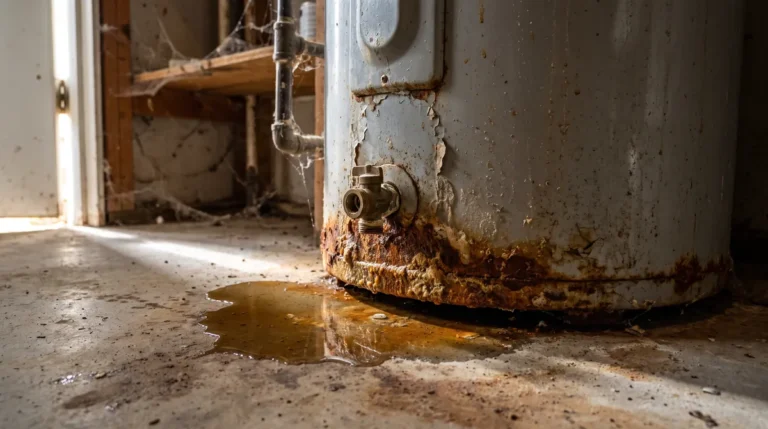
Black steel pipe that sits in wet bark mulch or touches the soil rusts from the outside. Outdoor runs near the meter are a common leak spot for that reason.
Bigger lots out toward Beavercreek and the rural edges of Clackamas County bring a different risk. Many of them have a buried gas line running from the meter to a detached shop, barn or garage. A shovel, a post-hole digger or a fence crew can nick that line years after it went in.
Earthquakes belong on this list too. Oregon’s Office of Emergency Management puts the chance of a magnitude 7.1 or larger Cascadia quake in the next 50 years at about 37 percent. Rigid pipe and old appliance connectors are the weak points when the ground moves. After any strong shaking, check for a gas smell near the meter and the water heater before relighting anything.
Who owns the pipe that is leaking
This question decides who you call. NW Natural owns the service line and the meter. NW Natural’s Oregon rights notice says you own the house line from the meter to your appliances. Keeping it up is your job.

In plain terms, a leak at the meter or on the utility side is NW Natural’s to fix. A leak anywhere downstream of the meter, including a buried line to a shop, is yours. That part is where a licensed plumber comes in.
What to do the moment you smell gas
NW Natural’s gas carries an added odorant that smells like rotten eggs. If you catch that smell inside, the order of these steps matters. NW Natural lists these steps on its natural gas safety page:
- Leave the building on foot and get everyone out, pets included.
- Do not flip switches, unplug anything, use a phone, strike a lighter or start a car near the leak.
- Once you are well away, call 911 and NW Natural at 800-882-3377.
- If someone shut the gas off at the meter, leave it off. NW Natural has to restore service and relight safely.
Do not go looking for the leak with a flashlight and a spray bottle while the smell is strong. That comes later, after the area is safe.
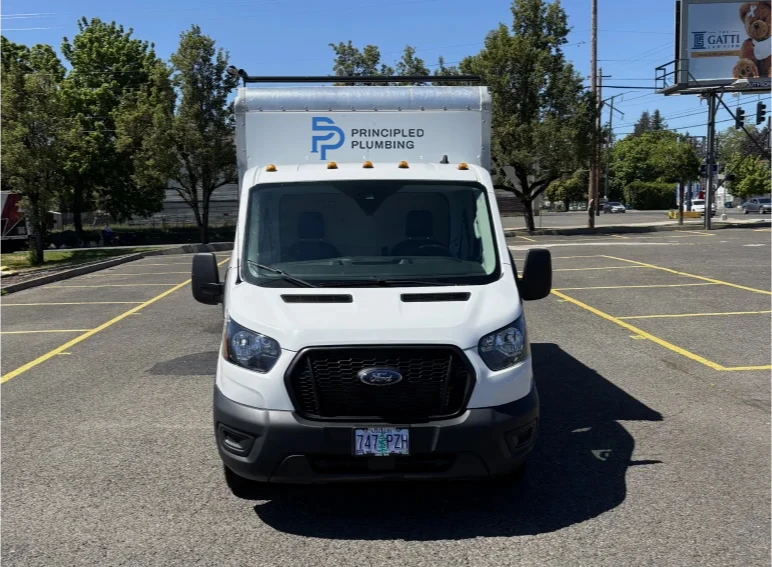
Schedule Your Service With a Local Expert
Need a plumber? We’ll show up fast, fix it right, and leave your space clean. Book your service today.
How a proper gas line repair works
Once NW Natural has made the site safe, the repair itself follows a set order. Our gas line repair visits in Oregon City run through these steps:
- Find the exact leak. A soap solution or an electronic detector shows which joint or section is leaking. A pressure test tells us whether there is more than one.
- Isolate and shut off. The gas is shut off at a branch valve, or at the meter after NW Natural has cleared the site, and the line is bled down.
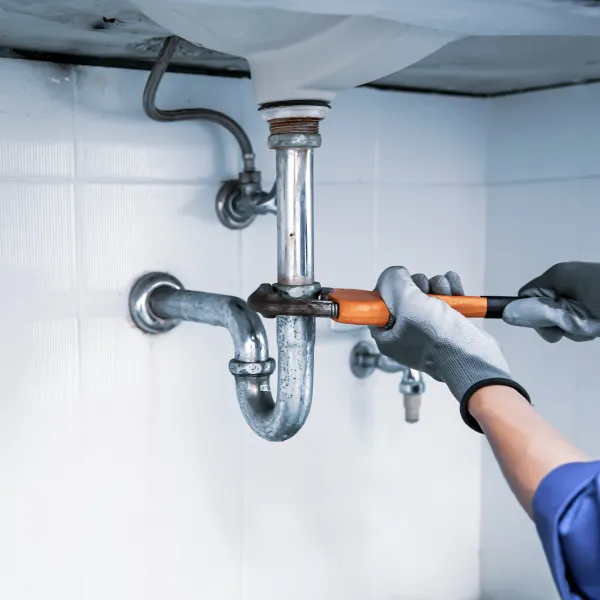
- Cut out the failed part. The leaking fitting or pipe section is removed. Rusted pipe nearby gets replaced too, since it usually fails next.
- Install new, gas-rated material. That means black steel with new fittings, CSST with its matching fittings, or approved plastic pipe for buried runs outside.
- Pressure test. The repaired system has to hold its test pressure before anything gets relit.
- Permit and inspection. The work gets inspected under the mechanical permit, then appliances are relit and checked.
There is one place sealant belongs on gas pipe. A gas-rated pipe dope or yellow gas-rated tape goes on the male threads during assembly. That is part of building a new joint. It is never a fix for a joint that is already leaking.
The same rule applies when a gas outlet is retired. In an Oregon City kitchen where the homeowner was switching from a gas range to an electric one, our plumber shut off and isolated the stove supply, removed the old appliance adapter, and installed a permanent threaded plug on the 1/2-inch stub-out, with gas-rated sealant on the threads. The line was then tested for leaks before we left. A new, properly made joint is the fix. A coating over an old one never is.

Buried lines and digging in your yard
Oregon law requires a call to 811 at least two business days before any digging project, including homeowner projects. The locators mark utility-owned lines.
The private line from your meter to a detached shop belongs to you. A utility locator will not mark it.
Ask your plumber or a private locating company to find it before you dig. If you do hit a buried gas line, get away from it and call 911 and NW Natural. Do not try to bend it back or wrap it.
Frequently Asked Questions
Is white Teflon tape OK on gas threads?
Use only tape or pipe dope rated for gas, usually the yellow gas-rated tape. Plain white tape is made for water lines.
Whatever sealant you use goes on the male threads before the joint is assembled. Wrapping tape around the outside of a leaking joint does nothing to stop gas.
How long does a gas line repair take?
It depends on where the leak is and how much pipe has to be replaced. A single accessible joint inside the house is a much smaller job than a buried line.
Buried line replacement to a shop or garage takes longer, since the trench has to be dug and the pipe inspected before it is covered. On rural Clackamas County lots, finding the old line can be a big part of the job. Ask your plumber for a schedule that includes the inspection.
Can I repair my own gas line in Oregon?
Oregon lets homeowners work on gas piping at their own home if they pull the required mechanical permit.
The work still has to be pressure tested and pass inspection. Propane systems add another rule: LP-gas work needs a license from the State Fire Marshal, even for homeowners. Most Oregon City homeowners hire the job out for the safety margin and the inspection sign-off.
Principled Plumbing LLC, Oregon City, OR 97045. Call (503) 919-7243. CCB #249603. Family-owned and available 24/7.