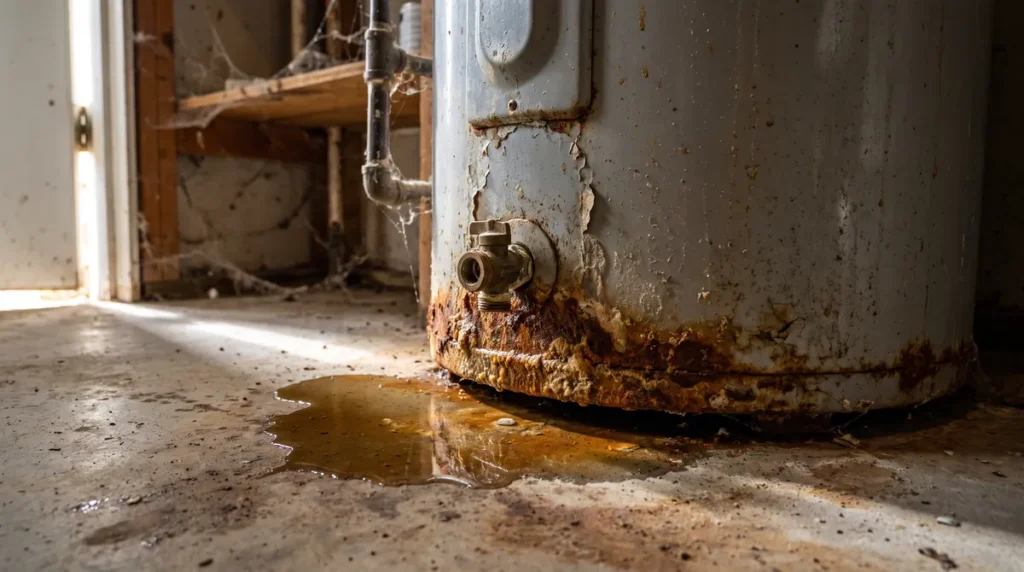
Key Highlights: The tank is only part of a water heater quote. Oregon requires a permit for every replacement, plus seismic straps, and a thermal expansion tank on any home with a pressure reducing valve or check valve. Gas units add venting, a sediment trap and garage clearance rules. A low “installed” price that leaves those out is a lower price for less work.
Where the water heater installation cost goes
A water heater installation costs more than the price tag on the tank because the permit and the code work come with it. In Oregon, a proper replacement is a permitted plumbing job with an inspection at the end.
When you compare quotes, the gap usually comes from what gets included. One quote swaps the tank and reconnects the pipes. Another brings the whole installation up to the current Oregon Plumbing Specialty Code. On paper they look like the same job.
What goes into a water heater installation in Oregon
Here is what an Oregon City install includes when it is done to code. Some of these items are easy to skip. All of them get checked at inspection.
A permit, every time
Oregon’s Building Codes Division says a permit is required to replace a water heater. A licensed plumbing contractor can pull a minor label permit for the job at a one- or two-family home. The work has to be done by a journeyman plumber or a licensed water heater installer.
Inside Oregon City limits, the city handles residential plumbing permits through its building division. That permit is what brings an inspector out to look at the straps, the venting and the relief valve piping.
Seismic straps
Oregon code requires water heaters to be anchored or strapped against earthquake movement. The standard detail puts one strap in the upper third of the tank and one in the lower third. The lower strap stays above the controls, and each strap is lagged into the wall framing.
A full 50 gallon tank weighs several hundred pounds. In a quake, a loose one can tip over and tear its gas line.
A thermal expansion tank
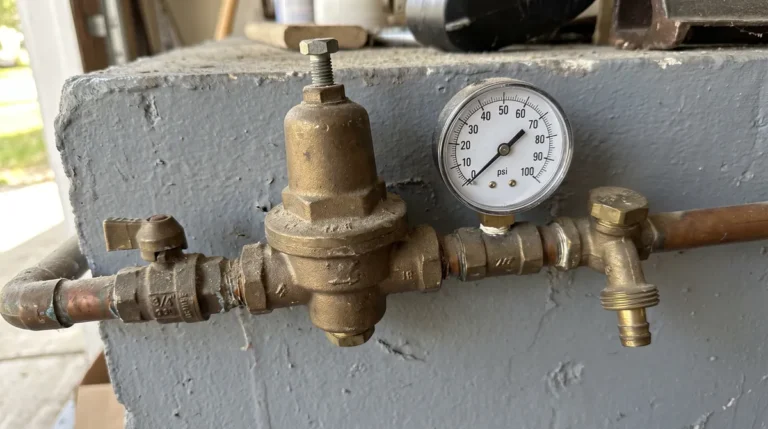
Heated water expands. In an open system, that extra volume pushes back into the city main. Once a check valve or pressure reducing valve closes that path, the pressure has nowhere to go. The Oregon code then requires an expansion tank or another approved device on the house side.
This is common in Oregon City. The city requires an individual pressure reducing valve on any service where the main runs above 80 psi, and that valve closes the system. Homes sitting low within a pressure zone are the most likely to have one.
Relief valve piping
The temperature and pressure relief valve needs a discharge pipe that runs full size to an approved spot. For water heaters in garages, Oregon’s code lets that pipe end over the garage floor. A drain pan does not count as a discharge point.
Gas connection and venting
Gas water heaters add their own list. The gas line needs a shutoff valve and a sediment trap before the unit. The vent has to be sized and pitched correctly with enough clearance from anything that burns. Older-style gas units in a garage have to sit 18 inches up, which is why so many Oregon City garages have a water heater platform. Newer flammable-vapor-resistant models may sit on the floor when the maker’s listing allows it.
Hauling the old tank away
The old unit has to be drained, disconnected and carried out. Plenty of low advertised prices leave that part off.

Schedule Your Service With a Local Expert
Need a plumber? We’ll show up fast, fix it right, and leave your space clean. Book your service today.
Why big box installation prices look lower
Even a same-size swap has real work in it. On a 40-gallon gas water heater replacement in an Oregon City basement, the tight space and stairway meant two technicians to carry the old tank out and the new one in safely. The job included new water flex connectors, a new gas flex connector, reconnecting the vent, a gas leak test before lighting, and a check of the burner and venting once it fired. The written scope also said that if we found an existing problem with the gas line, venting, or shutoff valves, we would tell the homeowner before doing any extra work. That is the kind of detail to look for in any quote.
Home improvement store prices often cover a basic swap with the same fuel, the same size and the same location. Anything outside that list gets added later. Expansion tanks, new straps, venting changes, gas line fixes and code corrections are the usual extras.
That is fine if the old install was already up to code. Older Oregon City homes often fall short: a single strap, no expansion tank, or a relief valve line that ends in the middle of a closet.
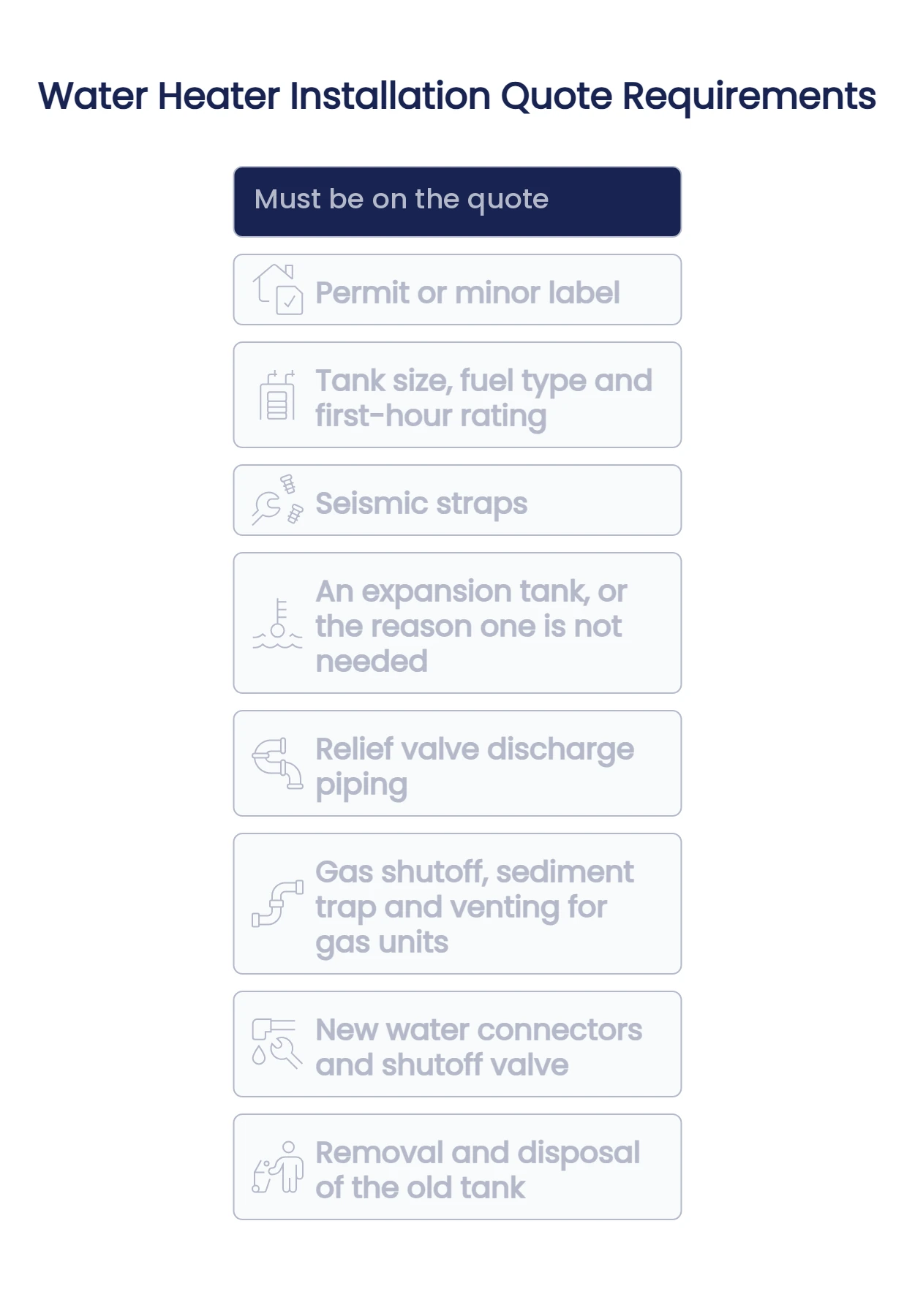
What a complete quote should list
Ask any installer to put these items in writing:
- Permit or minor label, and who schedules the inspection
- Tank size, fuel type and first-hour rating
- Seismic straps
- Expansion tank, or the reason one is not needed
- Relief valve discharge piping
- Gas shutoff, sediment trap and venting for gas units
- New water connectors and shutoff valve
- Removal and disposal of the old tank
Use that list to compare any quote side by side, including ours for a new water heater installation.
Two local facts that help your budget
Oregon City water comes from the Clackamas River and is treated by the South Fork Water Board. Clackamas River water is soft. That means less scale buildup inside the tank than in many parts of the country, which helps a well-flushed tank reach its expected life.
If you are replacing an electric tank, look at a heat pump water heater. Energy Trust of Oregon lists a $1,200 incentive. It applies when a contractor installs a qualifying heat pump unit in place of a standard electric tank in an existing home. Check the current terms on the Energy Trust site before you buy, since incentives change.
Here is what a heat pump install involved on an Oregon City job: removing the old tank, a new 50-gallon heat pump water heater, new hot and cold supply lines, a newly routed condensate drain, relief valve drain piping, a thermal expansion tank, and earthquake straps, all under a minor label permit. The unit also needed a 240-volt circuit, which the homeowner’s electrician added before we arrived.
Frequently Asked Questions
Can I replace a water heater without a permit in Oregon?
No. Oregon requires a permit to replace a water heater, even when the new one goes in the same spot.
Skipping it can cause trouble when you sell the house, because buyers’ inspectors look for the permit sticker and the straps. It can also complicate an insurance claim if the unit fails. Oregon City homeowners can confirm permit requirements with the city building division.
How long does a water heater installation take?
It depends on the scope. A straight swap of the same type and size in an easy-to-reach spot is the simplest job.
Changing fuel, moving the unit, adding an expansion tank, or reworking a vent adds work. Tankless and heat pump conversions involve the most. The inspection is scheduled separately after the install.
Does my water heater need an expansion tank?
If your home has a pressure reducing valve, a backflow preventer or a check valve on the main, the answer is almost always yes.
Those devices create a closed system, and Oregon code requires a way to absorb the expansion. Oregon City requires a pressure reducing valve wherever the city main runs above 80 psi, so plenty of local homes already have one. A plumber can check your main line in a couple of minutes.
Principled Plumbing LLC, Oregon City, OR 97045. Call (503) 919-7243. CCB #249603. Family-owned and available 24/7.